
Types of Kidney Cancer | RCC Guide 2026
Understanding the Different Types of Kidney Cancer
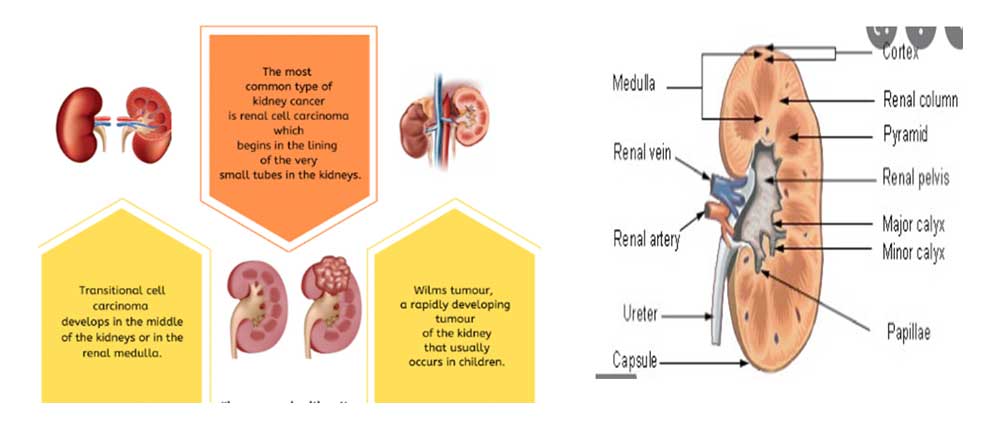
When a doctor mentions kidney cancer, the first thing to know is that it isn’t just one single disease. In the medical world, kidney cancer is broadly termed Renal Cell Carcinoma (RCC), but it branches out into several distinct subtypes.
Every subtype behaves differently under a microscope, grows at a different pace, and requires a highly customized treatment plan. To help you or your loved ones make sense of a pathology report, let’s break down the most common types in simple, everyday language.
1. Clear Cell Renal Cell Carcinoma (The Most Common Type)
This is the most frequent diagnosis, accounting for roughly **75% of all kidney cancer cases**. It gets its name simply because when pathologists look at these cells under a microscope, they appear completely pale or clear, like small bubbles. Because it is so common, medical science has developed highly targeted therapies and advanced surgical approaches specifically to treat this subtype effectively.
2. Papillary Renal Cell Carcinoma
Making up about **10% to 15% of cases**, this is the second most common variant. In this type, the tumor forms tiny, finger-like projections (called papillae). It is usually divided into Type 1 (which tends to grow slowly) and Type 2 (which can be more aggressive). Early detection is the absolute key to managing Papillary RCC successfully.
3. Chromophobe Renal Cell Carcinoma
A less common variant, accounting for about **5% of diagnoses**. The positive side to Chromophobe cells is that they are generally much less aggressive. These tumors often grow very slowly and are far less likely to spread to other parts of the body, making the long-term outlook for patients very favorable when caught early.
4. Collecting Duct Carcinoma (Rare & Aggressive)
This is a very rare form of kidney cancer, occurring in less than 1% of cases. It begins in the collecting ducts—the intricate tubes that channel urine out of the kidney. Because it can behave aggressively, it demands immediate, specialized intervention and a fast-tracked treatment approach combining multiple therapies.
5. Medullary Carcinoma
Another highly uncommon and aggressive variant. Clinical data shows that this type almost exclusively affects young adults of African descent who carry the sickle cell trait. Due to its unique nature, it requires highly specialized oncology management.
6. Renal Oncocytoma (Benign, but needs attention)
Here is some reassuring context: an oncocytoma is actually **benign (non-cancerous)** and does not spread. However, the catch is that on standard CT scans or MRIs, it looks almost identical to cancerous tumors. Because it is so difficult to tell them apart without looking at the tissue, a thorough evaluation by an expert clinical specialist is necessary to decide if surgery is required.
A Note on Your Diagnosis: No two tumors are identical. The exact subtype, its cellular grade, and your overall health will dictate the best path forward. Getting an accurate second opinion and an expert clinical evaluation from a dedicated specialist like Dr. Debabrata Mukherjee ensures you receive the most definitive care plan.
Consult Our Kidney Care Expert
If you have received a medical report indicating a renal mass or kidney concerns, do not navigate it alone. Get an accurate diagnosis, advanced staging evaluation, and personalized therapeutic guidance in Gurugram.
Email: dirnephro@gmail.com
For Appointments Contact: Co-ordinator at +91 95994 71244
Direct Patient Line: +91 8130060240