CCU Nephrology & Critical Care Kidney Specialist
Critical Care Nephrology: ICU/CCU Renal Excellence
Advanced management of metabolic emergencies, Acute Kidney Injury (AKI), and multi-organ distress under the clinical direction of Prof. (Dr.) Debabrata Mukherjee
Managing Acute Kidney Injury (AKI) in Critical Care
Acute Kidney Injury (AKI) in critically ill patients represents a highly dynamic and complex physiological challenge. Inside the intensive care unit (ICU) or coronary care unit (CCU), renal reserves are frequently compromised by severe systemic sepsis, acute cardiac shocks, major vascular surgeries, or nephrotoxic cascades.
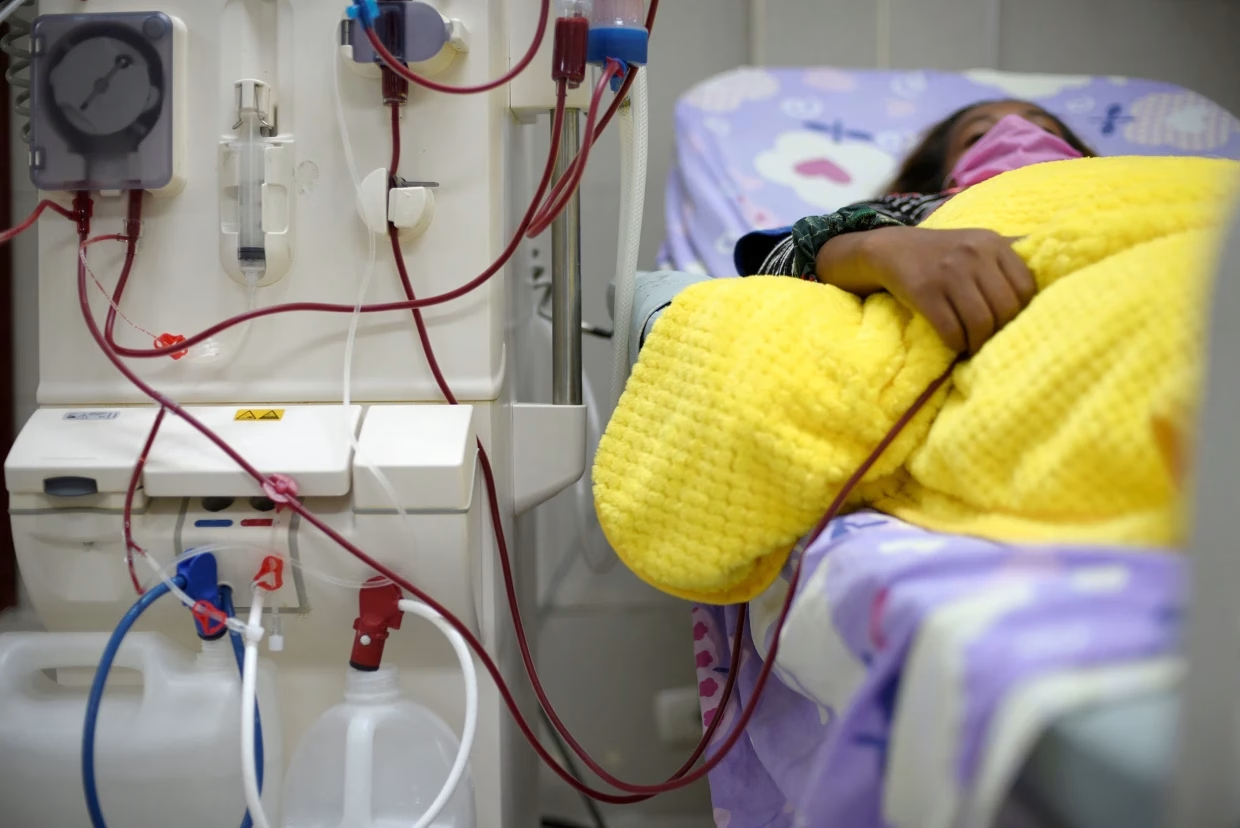
When traditional filtration methods are too aggressive for a fragile patient, Prof. (Dr.) Debabrata Mukherjee employs advanced continuous renal replacement modalities. These slow-infusion approaches safely stabilize the patient’s internal chemical environment, balancing vital metabolic levels while allowing distressed renal tissues the necessary time to heal.
Frequently Asked Critical Care Questions
CRRT is a slow, continuous 24-hour blood purification modality designed specifically for hemodynamically unstable patients in the ICU. Unlike conventional hemodialysis, which removes large fluid volumes rapidly within 3-4 hours and can cause dangerous drops in blood pressure, CRRT mimics stable native renal function, allowing gentle metabolic clearance without taxing a fragile cardiovascular system.
SLED bridges the gap between continuous CRRT and intermittent dialysis. It runs for extended durations (typically 6 to 12 hours) using adapted standard equipment at lower blood and dialysate flow rates. SLED offers exceptional fluid balance, cost-effective toxin clearance, and excellent hemodynamic tolerability, making it ideal for transitioning patients recovering from acute multi-organ failure.
During severe urosepsis or systemic hyper-inflammation, the body releases a massive wave of toxic cytokines and endotoxins that cause vascular collapse and organ damage. Specialized extracorporeal filters contain advanced resin molecules that trap and physically remove these circulating inflammatory elements from the bloodstream, breaking the destructive septic cascade and protecting downstream organ systems.
Managing severe cross-talk syndromes requires highly calibrated precision ultrafiltration to relieve massive systemic fluid overload without crashing central venous pressures. The core strategy combines targeted loop diuretic infusions, vasoactive medications to sustain mean arterial pressure, and early mechanical volume removal to lift internal lung congestion and restore appropriate perfusion pressure back to the kidneys.
ICU/CCU Interventions
Advanced treatment options tailored specifically for managing acute metabolic changes and severe conditions:
Precision CRRT & SLED
Continuous 24-hour slow waste clearance, avoiding abrupt dangerous fluid drops.
Extracorporeal Sepsis Control
Specialized high-adsorption filters targeting heavy systemic toxins.
Targeted Ultrafiltration
Calibrated precise fluid extraction to safely reduce massive lung congestion.
Complex Syndromes Addressed
- • Post-Surgical Renal Decline
- • Cardiorenal & Hepatorenal Balance
- • Critical Electrolyte & Acid Crises
- • Severe Urosepsis Multi-Distress
- • Drug-Induced Nephrotoxicity Trajectories
Emergency Nephrology & ICU Liaison
Time-critical renal injury in an intensive care setting demands immediate, expert coordination. Reach out to our specialized ICU liaison desk for immediate assistance.
ICU Dialysis & CRRT Desk
“`